ServicesSoftener Repair & Maintenance
Water Softener Repair & Maintenance in Seffner, FL
Spots on the dishes again, a brine tank full of water or salt that never goes down? We find out which part of your softener actually stopped working, fix that, and show you the small habits that keep it working.
Fixing the real problem, not guessing at it
A softener that quits rarely needs a whole new system. More often a single part has failed: a clogged injector, a stuck brine valve, a hardened salt bridge or a control head that lost its settings. Replacing the wrong part costs you money and leaves the hard water in place.
So we start by finding the cause. We watch the unit run through a regeneration, check each stage and look at what is going on inside the brine tank before we recommend anything. Then we explain what we found in plain words and what the repair involves.
If your softener is simply due for upkeep, we handle that too. Regular service catches small wear before it turns into scale on your fixtures and water heater.
What a repair or service visit covers
- A full regeneration check
- We cycle the softener manually and watch each stage, from backwash to brine draw to rinse. Where it stalls tells us where the fault is.
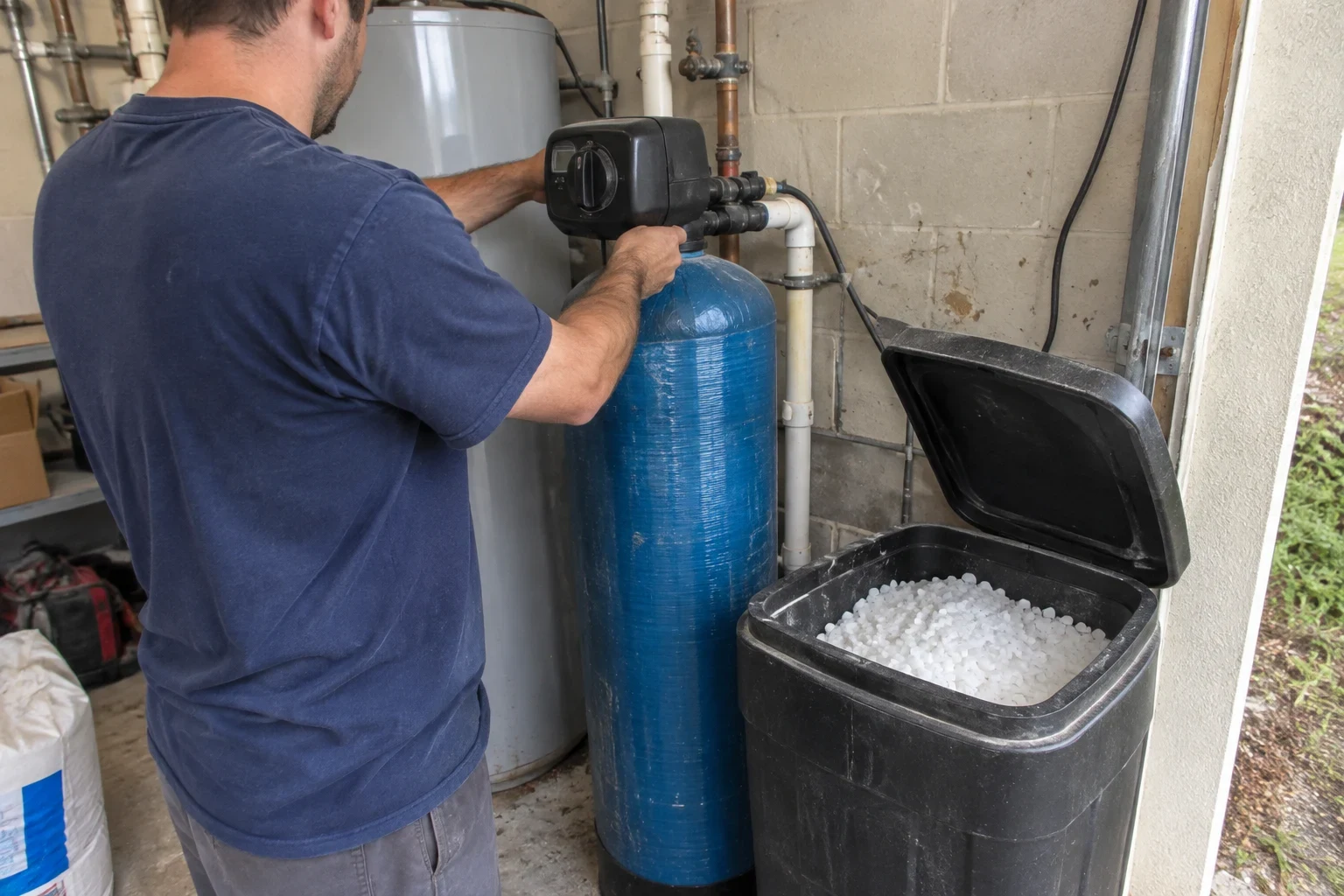
- Brine tank cleanout
- Salt can harden into a crust that hangs over empty space, and dissolved salt settles into a thick paste on the tank floor. We loosen the crust, remove the paste and rinse the tank so the unit can pull brine properly again.
- Injector and valve cleaning
- The small injector and screen that pull brine into the resin tank clog easily with sediment. We clean them, check the brine valve and float, and replace worn seals or spacers when needed.
- Control head settings
- We confirm the time, hardness setting and regeneration schedule match how your home uses water. Wrong settings waste salt or let hard water slip through.
- Resin condition check
- We look for signs the resin is fouled with iron or breaking down, such as beads in your faucet screens. If cleaning will help, we do it. If the resin is worn out, we tell you.
Signs your softener needs attention
Hard water is back
Spots on glasses, soap that will not lather and white crust on showerheads mean softening has stopped somewhere along the way.
Salt level never drops
If the salt sits at the same level for weeks, the unit is probably not drawing brine. A salt bridge or clogged injector is a common cause.
Water standing in the brine tank
A tank that fills high with water often points to a stuck float, a bad brine valve or a blocked drain line.
Small beads in faucets or toilets
Tan or amber beads in aerators usually mean a cracked distributor or riser inside the resin tank is letting resin escape.
Wrong time after a power outage
Summer storms can knock out power and reset older control heads. The unit may then regenerate in the middle of the day, or not at all.
How your service visit goes
- 1
A quick call first
Tell us what you are noticing and the brand on the unit if you can see it. That helps us bring the likely parts with us.
- 2
Finding the cause
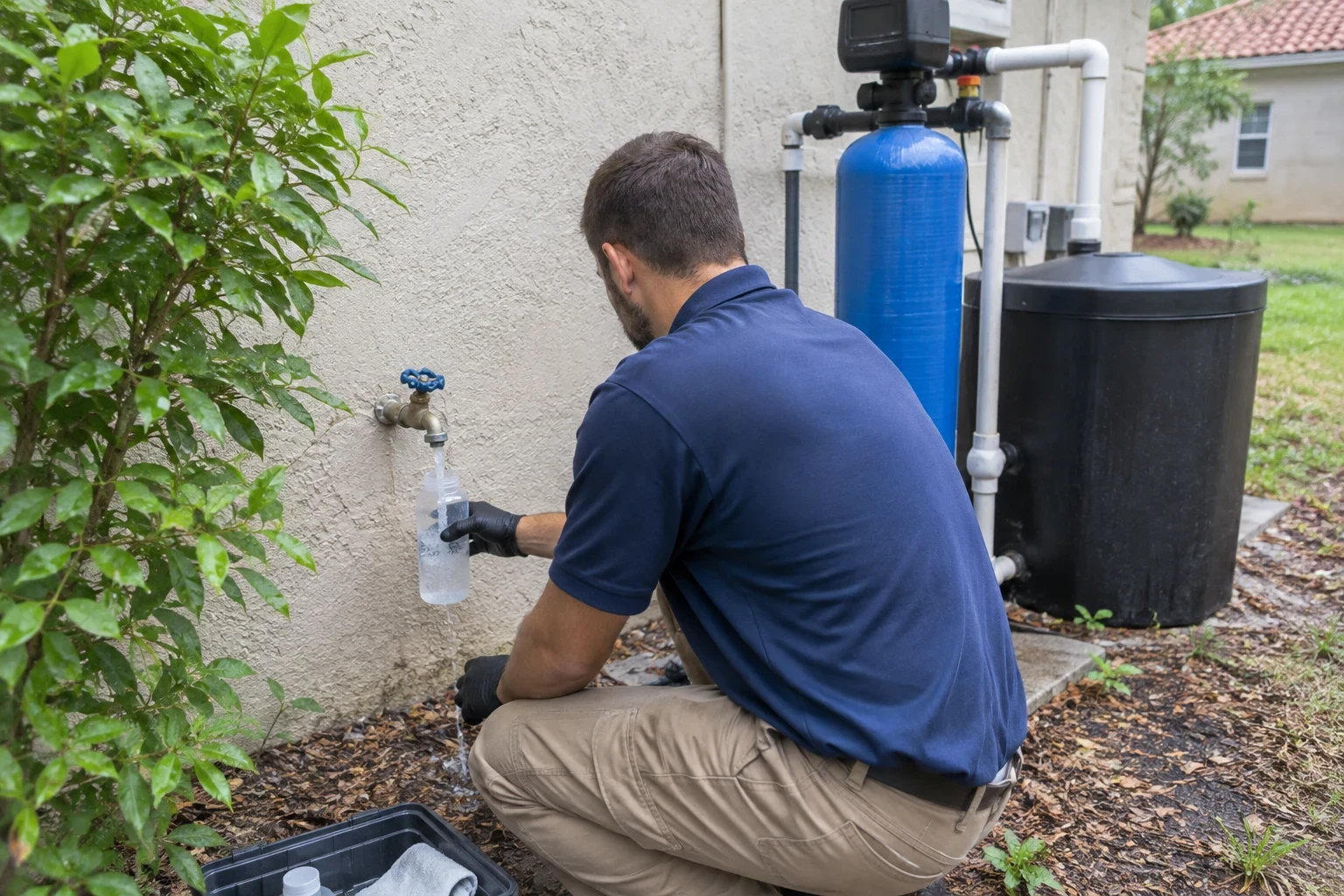
At your home we inspect the softener, run a regeneration and check the brine tank, valves and settings. We show you what we found before any work starts.
- 3
A clear repair-or-replace answer
We explain what the fix involves and whether repair makes sense for the age and condition of your unit. If replacement is the better value, we say so plainly and leave the choice with you.
- 4
Repair and tidy up
We make the repair, run the system through a full cycle to confirm it is softening again, and clean up any water or salt around the unit.
What affects the cost of softener repair
The price depends on what we find once the unit is running in front of us. We explain the cause and the fix before we start, so you know what you are paying for. A routine maintenance visit usually costs less than a repair that needs parts.
- Which part failed
- Cleaning an injector or clearing a salt bridge is a lighter job than replacing a control valve, motor or distributor tube.
- Brand and age of the unit
- Parts for common models are easier to find. Older or discontinued softeners can take longer to source parts for.
- Resin condition
- Resin fouled with iron may only need cleaning. Resin that has broken down needs replacing, which adds parts and time.
- Location of the softener
- A unit in an open garage is quicker to work on than one tucked into a tight closet or behind other equipment.
Softener repair questions
Something not covered here? (813) 370-1373
How often should my softener be serviced?
Most homes do well with a check once a year. If your water carries iron or sediment, or your household runs a lot of water, a shorter interval can help. Our ongoing customer support covers maintenance, filter replacements, and service needs, so when the next checkup comes around, one call to us gets it on the calendar.
Can you work on a softener you did not install?
In many cases, yes. Tell us the brand and model on the call and we will let you know honestly whether we can service it and get parts.
Should I repair my softener or replace it?
It depends on what failed and how old the unit is. A clogged injector on a newer softener is worth fixing. A worn-out control head on an aging unit with tired resin may not be. If replacement makes more sense, our Water Softener & Filtration System Replacement page covers how that works.
What kind of salt should I use?
Clean, high-purity pellets tend to cause fewer bridges and less sludge than rock salt. Avoid filling the tank to the very top, which makes bridging more likely in humid weather.
What warranty comes with your work?
Our whole-home treatment tanks carry a lifetime warranty. Installation workmanship comes with a 1-year warranty. On the call or at the visit we will explain which coverage applies to the work on your system.
Get your soft water back
Tell us what your softener is doing and we will schedule a visit to find the cause. You will hear what we found and what it takes to fix it before any work begins.