ServicesWell Water Treatment
Well Water Treatment in Seffner
Rotten-egg smell, orange rings in the toilet, grit in the aerators. Private wells bring their own problems, and they rarely show up alone. We work out which ones your water has first, then install treatment matched to them so you pay for what your home needs.
Treatment built around what your well actually has
Well water changes from one property to the next, even on the same road. Two homes can both smell of sulfur, and one needs an oxidizing filter while the other only needs a new anode rod in the water heater. Buying the wrong equipment means you still have the problem and a bigger bill.
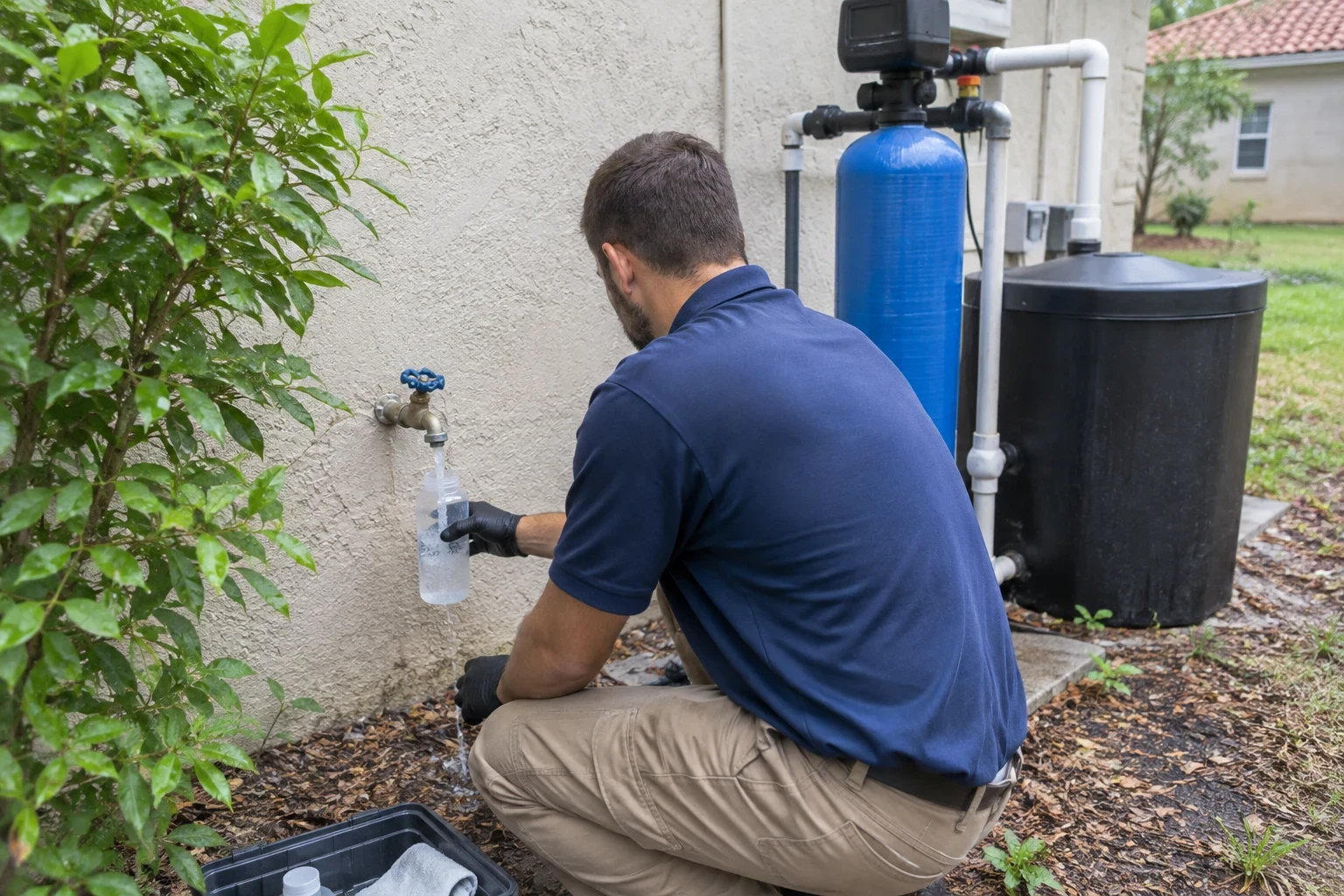
So we start with the symptoms. We ask where the smell or staining shows up, whether it is hot water, cold or both, how old the well and pressure tank are, and what equipment is already on the line. Wells around Seffner draw from limestone, which is why sulfur, iron and hardness are the usual suspects, but we confirm which ones are at work in your home before we recommend anything.
Then we explain what we found in plain terms, give you a written quote, and install only the stages that solve it.
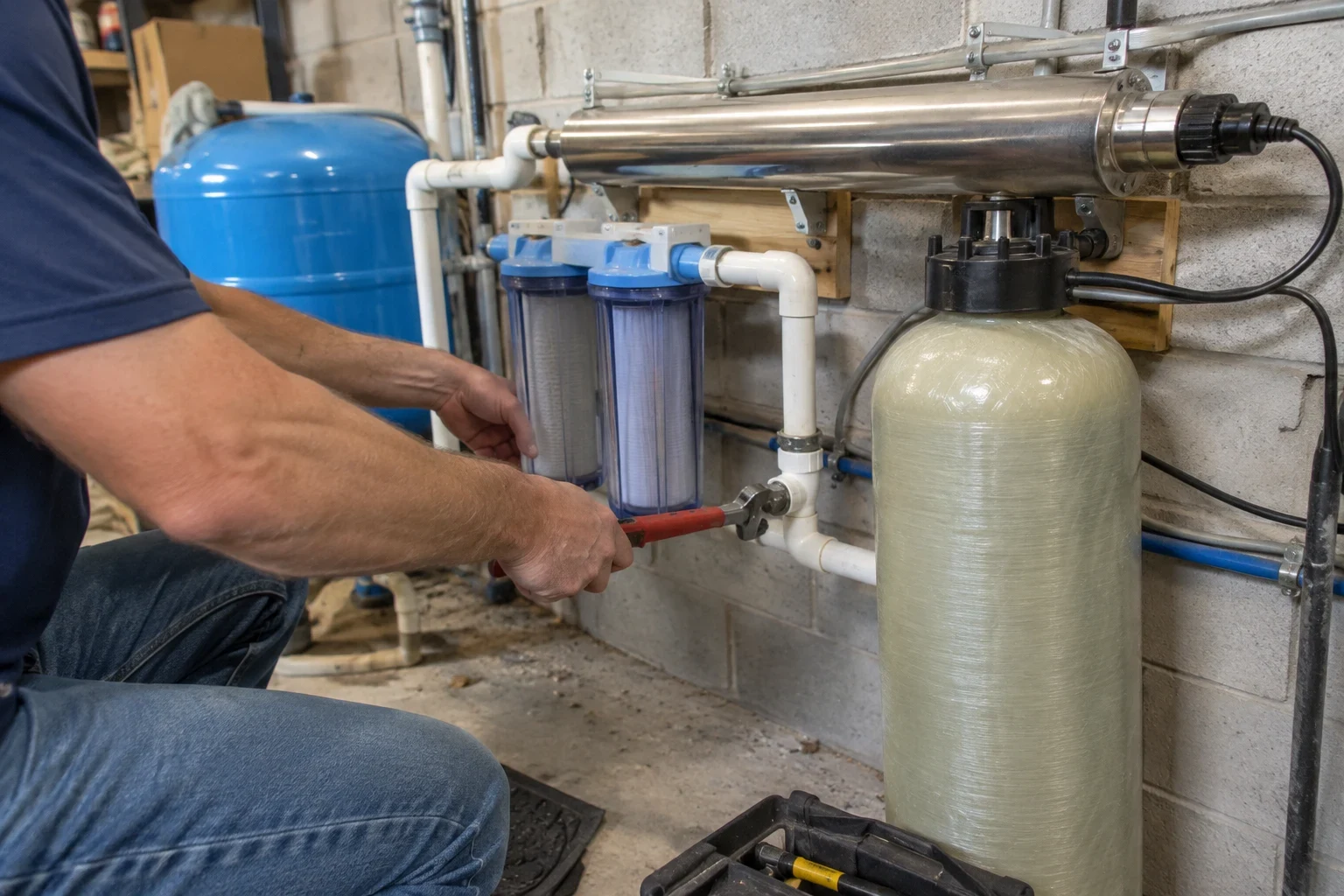
What well water treatment can include
- Sulfur odor removal
- Hydrogen sulfide gives well water that rotten-egg smell. Depending on how strong it is, we use an air-injection or oxidizing filter that converts the gas so it can be filtered out and backwashed away.
- Iron and manganese filtration
- Dissolved iron leaves orange and brown stains, and manganese leaves dark gray or black ones. A filter sized to your flow rate pulls them out before they reach fixtures, laundry and your water heater.
- Sediment protection
- Sand and grit wear out valves and clog aerators. A sediment stage at the front of the system protects everything downstream, including any treatment tank you add later.
- Softening when hardness calls for it
- Limestone wells often carry enough calcium and magnesium to leave white crust on faucets and shower glass. If that is part of your picture, the softener goes in after the iron and sulfur stages, which keeps iron from fouling the softener resin. You can read more about that equipment on our Water Softeners page.
- Drinking water at the kitchen tap
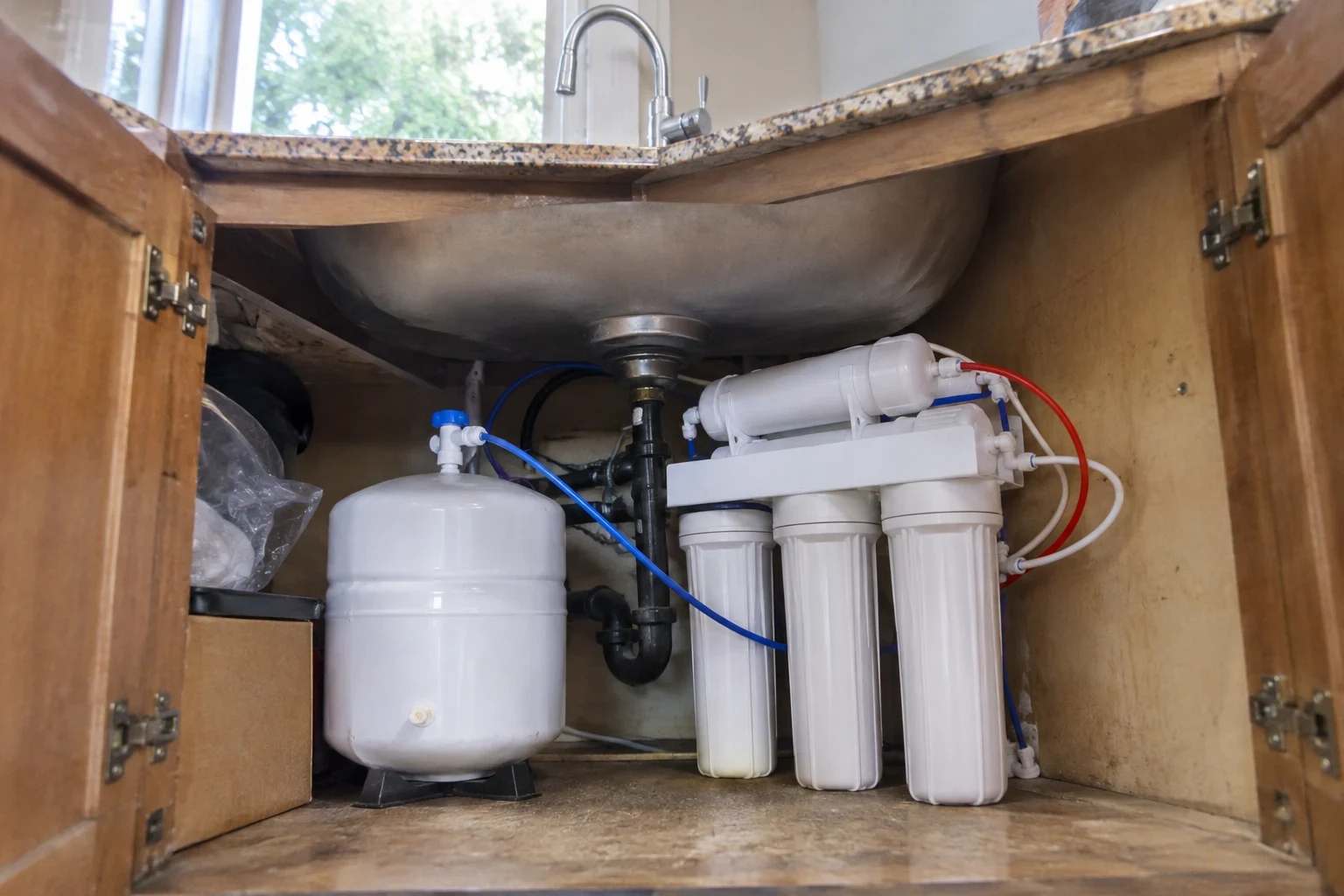
- Some families want an extra stage just for drinking and cooking. An under-sink reverse osmosis unit can sit after your whole-home system and handle that one tap.
- Help that continues after install day
- Our ongoing customer support covers maintenance, filter replacements, and service needs. If a cycle setting needs adjusting or the media is due for attention, one phone call gets it looked after.
Signs your well water needs treatment
A rotten-egg smell
If you smell it from every tap, the gas is likely coming from the well. If it shows up only in hot water, the water heater may be the source, and that changes the fix completely.
Orange, brown or black stains
Stains in toilets, sinks and on white laundry usually point to iron or manganese. They tend to get worse over time as buildup collects in pipes.
Grit in aerators or appliance screens
Sand or fine sediment can mean a worn well screen or simply a well that needs a sediment stage. Either way, it shortens the life of valves and appliances.
White crust and spotty glasses
Chalky deposits on faucets, showerheads and dishes point to calcium and magnesium in the water. The same minerals quietly settle at the bottom of your water heater tank, out of sight.
Existing equipment that never quite worked
If you already have a filter and still notice smell or staining, it may be the wrong type, undersized or set up out of order. We look at what is there before suggesting anything new.
What to expect from first call to finished install
- 1
Start with a phone call
Describe what you've been seeing, smelling or tasting and roughly when it started. A few questions about your well and plumbing help us show up already knowing where to look.
- 2
A visit to look at the cause
We check your well equipment, pressure tank, water heater and any existing treatment, and see where the symptoms appear in your home. Then we walk you through what we think is causing each problem and what would fix it.
- 3
A written quote
You get a line-by-line quote showing each stage and why it is there. If something can be fixed without new equipment, we tell you.
- 4
Installation day
We install a bypass valve so you can keep water running if service is ever needed, connect the drain line, and set backwash and regeneration cycles for your household. Drop cloths go down around the equipment area, and the packaging, old fittings and any debris leave with us when the job is done.
- 5
Follow-up and upkeep
We show you how the system works and what maintenance it needs, and we stay reachable for filter changes and service down the road.
What shapes the price of well water treatment
Two things drive most well water quotes: how many separate problems your water carries and how much water your household draws. Adding one sediment filter is a small job next to a full sulfur, iron and softening setup. Because we pin down the cause before quoting, you pay for the stages your home needs and skip the ones it doesn't.
- Number of treatment stages
- Most problems need their own treatment. Sediment, iron, sulfur and hardness can each add a stage to the system.
- How much water your home uses
- Homes with more bathrooms and heavier use need larger tanks, so pressure holds up when the shower and dishwasher run together.
- How strong the problem is
- A faint sulfur smell or light iron can often be handled simply. Heavy levels may call for an oxidizing system instead.
- Installation location
- How much room there is near the well or pressure tank, whether a drain and outlet are close by, and any repiping all affect the work involved.
- Upkeep over time
- Some filter media lasts for years, while cartridges and softener salt need regular attention. We lay out those ongoing costs before you commit.
Well water treatment questions
Something not covered here? (813) 370-1373
Do I really need more than one system?
Not always. If sediment is the only issue, one filter may handle it. When sulfur, iron and hardness show up together, each one usually needs its own stage, set up in the right order. We explain which apply to your home and the reason for each.
My water only smells when it's hot. Is that the well?
Often it isn't. A smell that shows up only in hot water usually comes from a reaction with the anode rod inside the water heater. In that case a whole-house sulfur filter may not fix it, and we'll say so plainly.
What warranty comes with the installation?
The whole-home treatment tank is backed by a lifetime warranty. Separately, our installation workmanship carries a 1-year warranty. After the system is up and running, we go over what each warranty covers so nothing about it is a guess.
Will a treatment system lower my water pressure?
A correctly sized system shouldn't cause a noticeable drop. Pressure complaints usually trace back to tanks that are too small for the home's flow rate, so we size equipment to your bathrooms and how your household uses water.
How much maintenance will it need?
That depends on the stages. Backwashing filters largely clean themselves, softeners need salt added, and cartridge filters get swapped on a schedule. We give you a simple upkeep plan, and our ongoing support covers filter replacements and service calls.
Find out what your well water really needs
Tell us what you are noticing, and we will talk through the likely cause and the next step. Get your quote by phone and know exactly what each stage is for.